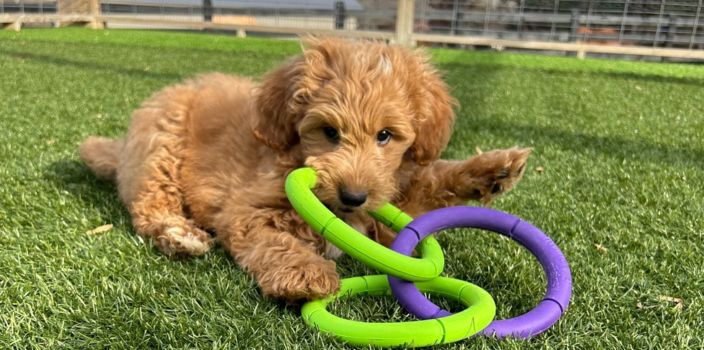

We all know what it feels like to need movement.
A walk clears your head. A bit of activity resets your energy. It’s not just about staying in shape, it’s about feeling balanced.
Puppies are no different.
Exercise plays a role in how they grow, how they behave, and how they settle into daily life. And while it’s easy to assume “more is better,” that’s not always the case. Especially for young, developing dogs.
Why Exercise Matters: Beyond the Physical
Exercise isn’t just about burning off energy.
For puppies, it supports muscle development, coordination, and overall health. Just as importantly, it helps with mental stimulation. A well-exercised puppy is more likely to be calm, focused, and receptive to training.
Without enough activity, puppies can become restless or develop unwanted behaviors. But too much exercise, especially too soon, can put stress on growing joints.
Finding the right balance is key.
How Much Exercise Does Your Puppy Really Need?
There isn’t a one-size-fits-all answer, but there are clear guidelines that can help.
Start with Age-Based Guidelines
A commonly recommended approach is the “5-minute rule”:
- 5 minutes of structured exercise per month of age
- Up to twice per day
For example:
- A 3-month-old puppy → about 15 minutes per session
- A 5-month-old puppy → about 25 minutes per session
This includes walks and intentional play, not free roaming.
Consider Breed and Energy Level
Not all puppies are built the same.
- High-energy breeds (like working or sporting dogs) may need more frequent activity and mental challenges.
- Lower-energy breeds may be satisfied with shorter, gentler sessions.
What matters most is observing your puppy. Energy levels, attention span, and recovery all provide useful signals.
Prioritize Quality Over Intensity
Exercise for puppies should be controlled and age-appropriate.
Good options include:
- Short walks on even surfaces
- Gentle play sessions
- Basic training exercises (which also provide mental stimulation)
Activities to limit or avoid:
- Long-distance running
- Repetitive jumping (like catching frisbees)
- Hard-impact play on rough surfaces
Puppies are still developing. Their joints and bones need time to grow properly.
Watch for Signs of Overexertion
It’s easy to overdo it, especially with an enthusiastic puppy.
Look for signs like:
- Slowing down or lagging behind
- Excessive panting
- Lying down mid-activity
If you notice these, it’s time to stop and rest. Recovery is just as important as activity.
Don’t Forget Mental Exercise
Physical activity is only part of the picture.
Training sessions, puzzle toys, and new environments all help stimulate your puppy’s mind. In many cases, mental enrichment can be just as tiring, and just as beneficial, as a walk.
A Thoughtful Approach to Healthy Puppies
At Georgia Dog Club, we place a strong emphasis on overall wellbeing.
That means helping families understand not just how to care for their puppies but how to support their development in a balanced, informed way. Exercise is a big part of that, but it’s always approached with intention.
Healthy puppies aren’t just active. They’re supported, guided, and given what they need at the right time.
Finding the Right Rhythm
The goal isn’t to tire your puppy out. It’s to build a routine that works for their age, breed, and stage of development.
When exercise is done right, you’ll see it. Better focus. Smoother training. A puppy that knows when it’s time to play… and when it’s time to rest.
And that’s where everything starts to come together.
If you’re up for another good read, these articles are a great place to start: